
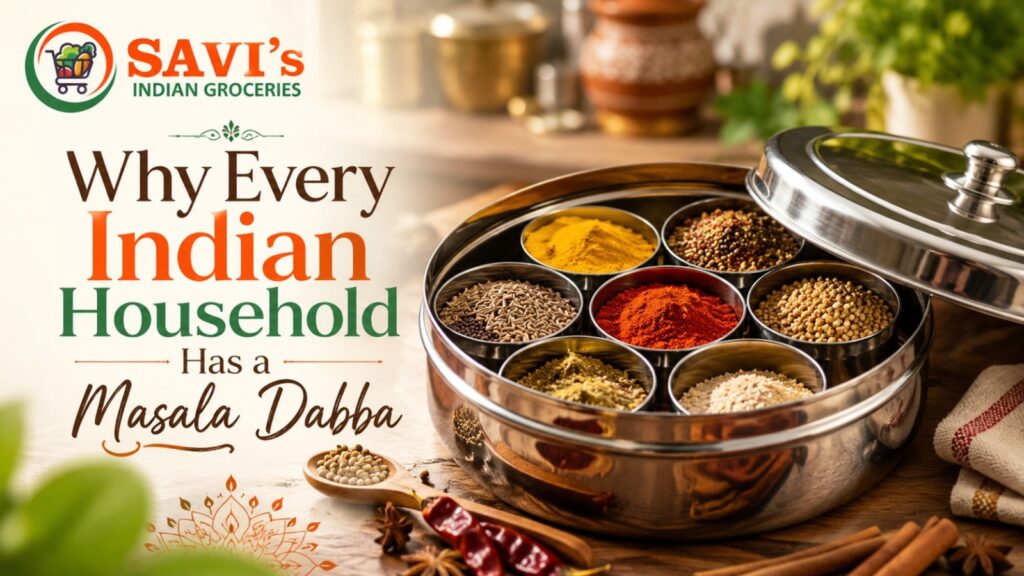
Walk into almost any Indian kitchen anywhere in the world, and you’ll find one timeless treasure sitting close to the stove — the Masala Dabba.
It may look like a simple round spice box, but for Indians, it’s much more than kitchen storage. It’s tradition, emotion, memory, and flavor — all packed into one container.
So, What Exactly Is a Masala Dabba?
A Masala Dabba is a traditional Indian spice box, usually made of stainless steel, containing small compartments filled with everyday spices.
Inside, you’ll often find:
✨ Turmeric
✨ Red Chili Powder
✨ Coriander Powder
✨ Cumin Seeds
✨ Mustard Seeds
✨ Garam Masala
✨ Salt
✨ Hing (Asafoetida)
Every household has its own version. Every family has its own secret balance of spices.
And that’s exactly what makes it special.
The Heartbeat of Indian Cooking
Indian food is not built around just one flavor.
It’s layers of aroma, spice, texture, and warmth.
The Masala Dabba makes this magic possible.
Instead of searching through multiple packets and jars while cooking, Indian home chefs can instantly access the essential spices needed to transform simple ingredients into soulful meals.
A pinch of turmeric for color.
A touch of cumin for aroma.
A little garam masala for warmth.
In Indian kitchens, cooking is fast, instinctive, and emotional and the Masala Dabba sits right at the center of it.
More Than a Spice Box — It’s an Emotion
For many NRIs living abroad, seeing a Masala Dabba instantly brings back memories of home.
The sound of mustard seeds crackling in hot oil.
The aroma of fresh tadka filling the kitchen.
Mother’s hands moving effortlessly while cooking.
It reminds people of childhood dinners, family gatherings, festivals, and Sunday lunches.
Even second-generation Indian families growing up overseas often recognize the Masala Dabba as a symbol of their roots and culture.
Every Region Has Its Own Flavor Story
India’s diversity reflects beautifully inside the Masala Dabba too.
A Punjabi household may use more garam masala and kasuri methi.
A Gujarati kitchen may include sesame and mustard seeds.
South Indian homes often keep curry leaves, sambar powder, and rasam masala close by.
No two spice boxes are exactly alike — just like no two Indian meals are exactly the same.
Why It Still Matters Today
In today’s world of ready-made sauces and instant meals, the Masala Dabba still survives — proudly.
Why?
Because Indian cooking is deeply personal.
The Masala Dabba keeps tradition alive while adapting to modern lifestyles. It’s efficient, organized, sustainable, and deeply connected to heritage.
And honestly, no fancy modern kitchen gadget can replace the comfort of opening that familiar spice box every day.
A Little Box That Holds Generations
The beauty of the Masala Dabba is simple:
It connects generations through food.
Grandmothers pass recipes to mothers.
Mothers teach daughters and sons.
Families carry these flavors across countries and continents.
And somewhere in every Indian kitchen, the Masala Dabba continues its quiet role — preserving culture one meal at a time.
Because in Indian homes, spices are not just ingredients.
They are stories.